The Shift
The newsletter for execs, leaders, and business partners who want to bring people together and make shift happen.
Need more creativity from your team? Structure is the answer.

There’s a growing need to solve complex problems together at work, and the types of problems that need solving require more and more creativity from our teams.
It is probably safe to say that we’ve all been made to believe (at some point in our lives) that creativity thrives only with free time, and that any structure will stifle any possibility of a creative output.
Or that we need a muse to visit us to have any creative inspiration – whether that is writing, drawing or plain-old problem solving.
But it isn’t true.
In today’s newsletter we are going to share 5 simple tips to help stimulate creativity. You’ll see that what drives creativity for ourselves or within our teams is the opposite of what we may have learned.
In fact, creativity is as much – if not more – about creating the right conditions and applying disciplined processes.
5 Steps to Team Creativity
When starting a new project, or bringing together a group of people to solve a problem, we have to pay attention to who we are inviting. Do they have different experiences and backgrounds (e.g., role, age, career stage, culture, etc.)? Do they bring different ways of thinking about the problem? Maybe they’ll even provide a different definition of what the problem is!
Mix it up. With diverse people and perspectives in the room, you will get a wider range of ideas and less group think. If you are always working with the same, intact team – invite others to join.
But you also need to make sure that every voice is heard. Any group will have individuals with different ways of working and contributing. Some people think best on their feet, while some people need time to reflect.
So you need to accommodate different ways of working and thinking in your workshops and meetings. Building in some time for people to think alone before sharing thoughts with the group can be very helpful. Visualizing the conversation (writing everyone’s ideas on sticky notes, whiteboards, etc) is important so that nothing gets lost. Ask to hear from people who have been quiet.
Whether you’re a team leader or a facilitator, you need to foster an environment where every team member feels that they can speak freely, contribute ideas that may go against the norm, and feel supported when challenging the status quo.
They need to feel that there won’t be negative repercussions for doing it – in fact, they need to feel that it’s encouraged.
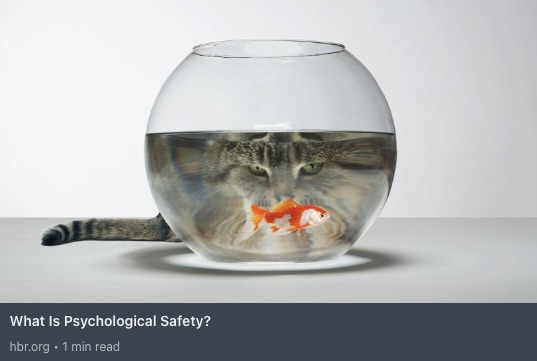
One of the most important conditions for people to be creative – to be curious, experiment, and take risks – is psychological safety. But that safety needs to be intentionally nurtured.
- Focus on learning over execution.
Set up the problem as a learning opportunity rather than an objective. When exploring new territory, everyone is exploring. Learning involves testing, failing, and trying new paths. It emphasizes the process, not just the results. It also means no-one is the expert.
- Be vulnerable.
- Ask lots of questions.
It’s scientifically proven that people are more primed for creativity when they are in a good mood. When an area of the brain called the Anterior Cingulate Cortex (ACC) is activated, we’re more receptive to suggest and build on off-the-wall ideas.
And your ACC is most active when you are in a good mood. Plus, a good mood puts our brains in ‘safe mode’, and that increases the chances we will take risks.
So what are some ways to elevate the mood?
- Focus on the positive.
- Share some funny experiences.
- Share gratitude.
4. The power of limits: Embrace constraints to unlock your team’s potential
This might be the most counter-intuitive enabler of creativity. Instead of thinking that you need to have unlimited time or no boundaries – you actually need a disciplined process to be creative.
Tech and product design firms have figured this out. But it’s also true of many creative artists, like Charles Mingus or Jerry Seinfeld.
In our experiences with teams, carefully engineered problem solving sessions have been where we’ve seen most creativity emerge.
We are big fans of Design Sprint methods, which combine Design Thinking and Lean Startup with strong facilitation and highly structured workshops. Here are some of the core principles that allow any team – not just a bunch of ‘creatives’ – to come up with some really fantastic ideas and quickly turn them into concrete actions and plans:
- Progress over perfection.
- Careful staging.
- Limit open discussion.
5. Serious work, playful mindset: Encourage creativity with fun and games
- Increasing your brain power.
- Uncovering deeper, often hidden, meanings.
- Powerful stories.
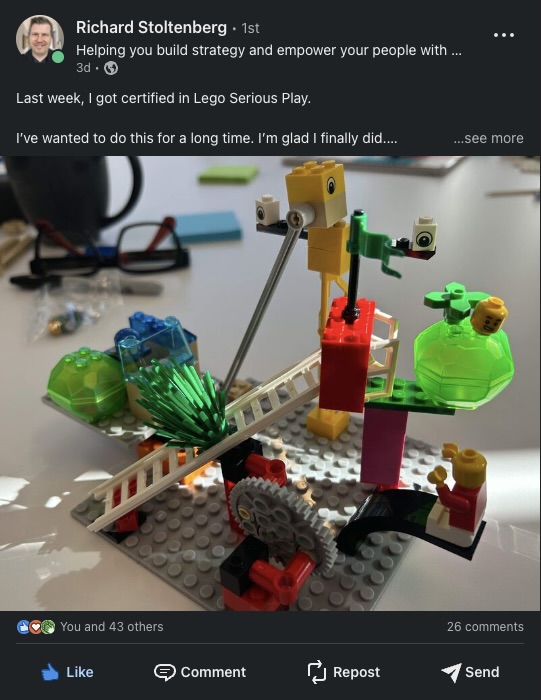
Play sparks imagination and coming up with narratives. Everyone is a storyteller. And stories are 22x more ‘sticky’ than the most compelling fact – so what you come up with is more enduring.
Hard work can be incredibly fun. You just need to play hard.
- Bring in diverse perspectives
- Create a safe space
- Elevate the mood
- Embrace constraints
- Get playful
If you enjoyed this issue and want to learn more about how to brings teams together to creatively collaborate, feel free to subscribe and/or reach out to us.
Thanks for reading. See you again next week!
- Run workshops with your team to help you define a strategy, an employee experience, and/or create a new culture
- Teach you how to facilitate powerful collaboration sessions with your team that yield results, fast